Home / Guides / Bingo Calls & Nicknames
Bingo heritage Ad policy

Bingo Calls & Nicknames — The Complete 1–90 List

Every bingo number from 1 to 90 with its traditional nickname and origin story, plus the 2003 modernisation attempt that failed and the UK's current Caller of the Year.

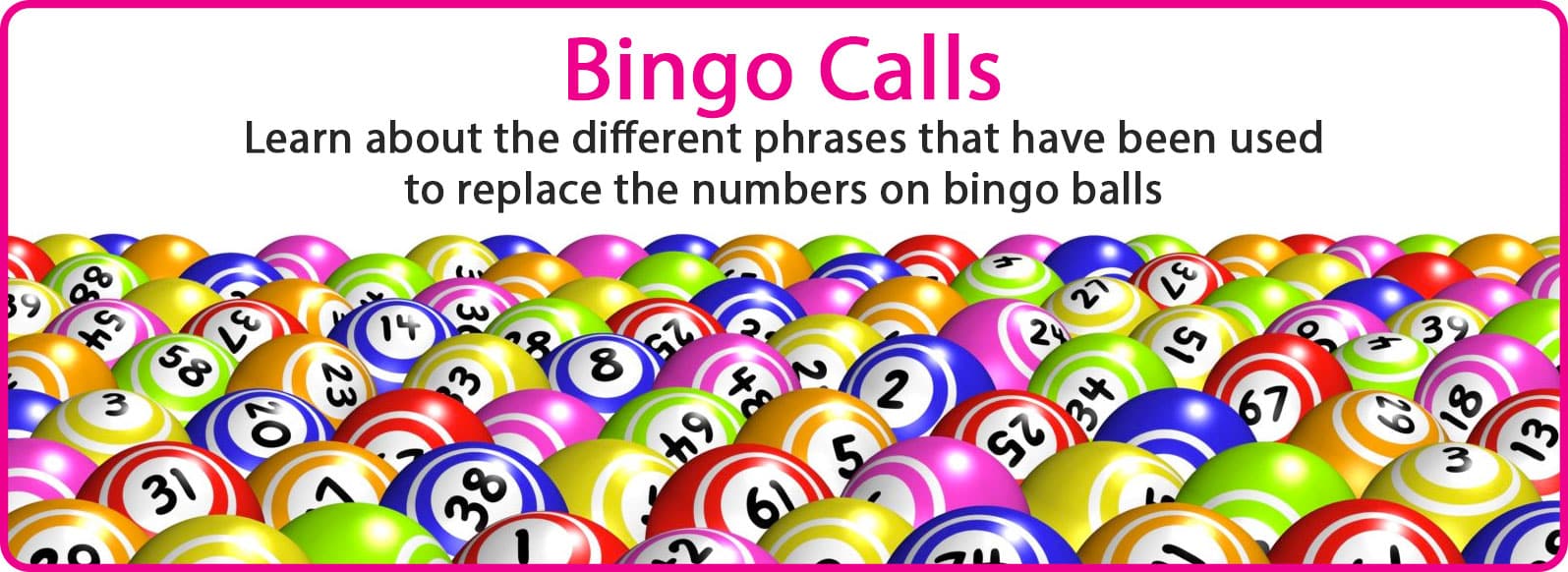
Bingo calls are the rhyming nicknames callers use for each number in 90-ball bingo. Kelly’s Eye for 1. Two Little Ducks for 22. Two Fat Ladies for 88, at least traditionally. Most of them have been around since the mid-20th century, many originated in wartime slang or music hall comedy, and almost none are used in online bingo now. People still look them up for pub quizzes, for family bingo nights at Christmas, for hen do games, and occasionally because someone has been handed a microphone at a charity event and told they’re calling the numbers.

Full list below, with the stories behind the calls that have stories. A few bits around it — the operator who tried to drag the repertoire into the twenty-first century and mostly failed, the professional competition for callers that still runs, the handful of calls that have quietly left the circuit. If you’re new to bingo itself, the beginner’s guide to playing bingo covers rules and tickets.

Why bingo calls exist

Bingo halls used to be loud. A few hundred people in a room together, paper tickets, physical daubers, and the constant low hum of conversation between games. A caller shouting “Fifty-two!” into that noise had a real chance of being heard as “Fifteen!” by someone at the back. Numbers got missed. The nicknames evolved as a practical fix — rhythm and colour that cut through the chatter. “Danny La Rue, fifty-two” is much harder to confuse than the number on its own.

The cultural side came after. Callers in the 1950s and 60s turned the role into performance. Good ones had timing, repeated catchphrases, small jokes that landed between numbers. The calls became part of the bingo-hall identity, which is why so many of them reference the era they were invented in. Music hall stars, wartime slang, Cockney rhyme, shapes the numbers themselves resemble when written out.

The complete 1–90 bingo calls list

Primary traditional call on the left, a short note on the origin where one exists. Where a number has a widely-used alternative, it’s included too.

Number Call Origin / note
1 Kelly’s Eye Ned Kelly, Australian outlaw; the thin eye slot in his iron helmet resembled the digit.
2 One Little Duck The shape of the 2 resembles a duck on water. Response: “quack quack”.
3 Cup of Tea Rhyme. Occasionally “You and Me” or “Dearie Me”.
4 Knock at the Door From “One, two, buckle my shoe; three, four, knock at the door.”
5 Man Alive Nautical origin — a shout for a shipwreck survivor found alive. Rhymes with 5.
6 Tom Mix American silent-film cowboy, popular in 1920s Britain. Also “Half a Dozen”.
7 Lucky Seven Considered lucky across several cultures. Also “God’s in Heaven”.
8 Garden Gate Rhyme. Originally “Harry Tate” — Cockney rhyming slang for “late” — from the 1920s music hall comedian.
9 Doctor’s Orders “Number 9” was a laxative pill issued by army doctors in WWI.
10 Downing Street Residence of the UK Prime Minister. Older: “Cock and Hen”.
11 Legs Eleven The 11 resembles a pair of legs. The traditional wolf-whistle response has been banned in some modern halls.
12 One Dozen Straightforward. Also “A Monkey’s Cousin” in older rhyming slang.
13 Unlucky for Some Near-universal Western superstition.
14 Valentine’s Day February 14th. Modern and sticky.
15 Young and Keen Rhyme. Also “Rugby Team” for 15 players.
16 Sweet Sixteen Also “Never Been Kissed” — from the 1930s pop song “Sweet Sixteen and Never Been Kissed”.
17 Dancing Queen Added after ABBA’s 1976 single — “You are the Dancing Queen, young and sweet, only seventeen”.
18 Coming of Age Legal adulthood in the UK.
19 Goodbye Teens Last year of adolescence.
20 One Score Archaic English for twenty. Also “Getting Plenty”.
21 Key of the Door 21 was the UK voting age before 1969. Also “Royal Salute” — the traditional 21-gun military salute.
22 Two Little Ducks Two ducks. Also “Dinky Doo” or “Quack Quack”.
23 The Lord is My Shepherd Opening line of Psalm 23.
24 Two Dozen Straightforward. Also “Did You Score?”.
25 Duck and Dive Rhyme, plus a play on the shape of the 2 (duck) next to 5.
26 Pick and Mix Rhyme. Historically also “Half a Crown” (two shillings and sixpence, pre-decimal currency).
27 Gateway to Heaven Rhyme.
28 In a State Cockney rhyming slang — “He was in a right two and eight” means “he was in a poor state”.
29 Rise and Shine Rhyme.
30 Dirty Gertie From the nickname for the bronze statue La Délivrance installed in North London in 1927, and later reinforced by the WWII soldiers’ song “Dirty Gertie from Bizerte”.
31 Get Up and Run Rhyme, possibly from sergeants shouting at squaddies.
32 Buckle My Shoe Continuation of the nursery rhyme: “Thirty-two, buckle my shoe”.
33 All the Threes Callers use “all the” for any doubled digit.
34 Ask for More Rhyme.
35 Jump and Jive Rhyme.
36 Three Dozen Straightforward.
37 More than Eleven Loose rhyme.
38 Christmas Cake Rhyme.
39 Steps From John Buchan’s 1915 novel and Hitchcock’s 1935 film “The 39 Steps”.
40 Life Begins From “life begins at forty”.
41 Time for Fun Rhyme — continuation of “life begins at forty”.
42 Winnie the Pooh Rhyme. A.A. Milne’s bear endures.
43 Down on Your Knees From a wartime song.
44 Droopy Drawers The two 4s resembling sagging trousers.
45 Halfway There Midpoint of a 90-ball game.
46 Up to Tricks Rhyme.
47 Four and Seven Just the digits. No stuck nickname.
48 Four Dozen Straightforward.
49 PC From the 1946 radio serial “The Adventures of PC 49”.
50 Half a Century Also “Bullseye” — from the Jim Bowen TV show, where £50 was the prize level.
51 Tweak of the Thumb Rhyme.
52 Danny La Rue Irish drag entertainer, enormously famous in 1960s-70s Britain.
53 Stuck in the Tree Rhyme. Also “Here Comes Herbie”, after the Disney VW Beetle film.
54 Clean the Floor Rhyme.
55 Snakes Alive Rhyme. Double 5s vaguely resembling snakes.
56 Shotts Bus The 56 bus route in Scotland ran from Shotts to Glasgow, journey time about 56 minutes. Regional.
57 Heinz Varieties From the “57 varieties” marketing slogan Heinz has used since 1896.
58 Make Them Wait Rhyme — some callers deliberately pause before revealing the number.
59 Brighton Line The London-to-Brighton railway line, and the old Brighton telephone exchange prefix.
60 Five Dozen Also “Grandma’s Getting Frisky”.
61 Baker’s Bun Rhyme.
62 Turn on the Screw Rhyme. Also “Tickety-boo”.
63 Tickle Me Rhyme. Sometimes paired with the Tickle Me Elmo toy reference.
64 Red Raw Rhyme. Also associated with The Beatles’ 1967 song “When I’m Sixty-Four”.
65 Old Age Pension Traditional UK pension age, though the real age has shifted upwards.
66 Clickety Click The rhythm of two 6s, and railway slang for the sound of trains on track joints.
67 Made in Heaven Rhyme.
68 Saving Grace Rhyme, possibly linked to the hymn “Amazing Grace”.
69 Either Way Up The number reads the same upside down. Also “Meal for Two” in some halls.
70 Three Score and Ten Biblical lifespan reference, Psalm 90.
71 Bang on the Drum Rhyme.
72 Six Dozen Straightforward. Also “Par for the Course” in golf-adjacent rooms.
73 Queen Bee Rhyme.
74 Hit the Floor Rhyme.
75 Strive and Strive Rhyme.
76 Trombones From Meredith Willson’s 1957 song “Seventy-Six Trombones”.
77 Sunset Strip From the 1958-64 American TV series “77 Sunset Strip”.
78 Heaven’s Gate Rhyme.
79 One More Time Rhyme — also a joke about the repetitive nature of bingo calling.
80 Gandhi’s Breakfast The 8 and 0 resembling Gandhi sitting cross-legged with an empty plate. A dark joke that has stuck.
81 Stop and Run Rhyme.
82 Straight on Through Rhyme.
83 Time for Tea Rhyme.
84 Seven Dozen Straightforward.
85 Staying Alive From the 1977 Bee Gees song.
86 Between the Sticks Football reference — goalkeepers stand between the posts.
87 Torquay in Devon Rhyme.
88 Two Fat Ladies The two 8s resembling rounded figures. Some modern halls have moved away from it.
89 Nearly There Second-to-last number in 90-ball bingo.
90 Top of the Shop Highest number in the game. Also “End of the Line”.

The 2003 Butlins modernisation that failed

Butlins had a go at this. In 2003 the holiday camp chain commissioned a professor of popular culture to freshen up the repertoire — swap out older wartime references, bolt on something that felt current. Gareth Gates was the headline attempt, lifted straight off Pop Idol where he’d just come second. A scattering of others. A full-scale “bingo calls for the noughties” rebrand across the holiday park bingo sessions.

It didn’t land. Holidaymakers pushed back quickly enough that the press at the time treated it as a small culture story. Most of the new calls vanished before the 2003 season finished. More than two decades on, you won’t find a caller anywhere in the UK still saying “Gareth Gates” for 8. The only early-2000s additions that held on were ones tied to something with actual staying power — ABBA for 17, a few others, nothing that depended on who was topping the charts that month.

Why the traditional calls have lasted is the interesting part. Celebrity references age out quickly because celebrities age out quickly. The old ones are grounded in less mobile things — the shape of a number, a wartime memory, a rhyme you can hold in your head without knowing who anyone is. That’s the part the Butlins brief missed. You can’t modernise your way out of a vocabulary built on permanence.

The Caller of the Year competition is still running

Worth addressing head-on: plenty of articles on bingo calls claim the Bingo Caller of the Year competition ended in 2007. It didn’t. It paused, came back, paused again, came back.

Here’s the quick version. The National Bingo Game Association launched the competition in 1994 and ran it annually for over a decade. The 2007 contest was the last one before a long hiatus — Gala Bingo had spun off to do their own thing, and the shared national contest quietly died. It was eventually revived at Buzz Bingo Great Park in 2019. Covid killed the next two years. Club 3000 Wigan hosted the comeback in 2022. Nothing in 2023. The 2024 final ran at Mecca Bingo Wakefield, where Issy-Mae Hunt of Buzz Bingo Ipswich brought a ukulele and a self-written song and walked off with the title. Over 500 people were in the room. The next round is set for 2026.

What the judges look for is roughly what you’d expect — knowledge of the game, stage presence, technical calling ability — and in some rounds specifically the fluency with traditional bingo calls. Benj Maycock (the 2022 winner) and Issy-Mae Hunt are working callers who get paid, in part, to keep this vocabulary in circulation. Which is why you can ignore anyone telling you bingo calls are a dying art.

The calls that have quietly fallen out of use

Most of the traditional calls have survived more or less unchanged for sixty or seventy years. A few haven’t. It’s worth being honest about which.

Two Fat Ladies for 88 is the obvious one. Some mainstream UK operators have quietly moved away from it on the grounds that it’s unkind or dated. “Wobbly Wobbly” appears in several modernised caller scripts. The original hasn’t vanished — traditionalists still use it, plenty of players genuinely don’t mind it — but it’s no longer the universal default it was in the 1990s. If you’re calling at a family bingo night, neither choice is wrong.

The wolf-whistle response to Legs Eleven is a messier shift. The whistle was, for most of the 20th century, the standard response from the room whenever 11 was called. Several modern halls now discourage it outright, a few have asked repeat offenders to leave, and some have gone the other way and kept it as tradition. No single position has won out. It’s one of the places where bingo-hall culture has quietly had to decide what to carry into the present and what to let go.

The early-2000s celebrity rhymes — the Butlins set plus various others from different operators — mostly faded. The ones that stuck tied the number to something with long-term cultural weight (ABBA for 17, The Beatles for 64) rather than short-lived fame. “Gareth Gates” for 8 hasn’t survived. “Wills and Kate” for 8 gets occasional use in some halls but hasn’t displaced Garden Gate.

Some regional calls are hyper-local and won’t travel. “Shotts Bus” for 56 only makes sense in central Scotland. Welsh, Northern Irish, and Liverpudlian halls have their own variants that don’t feature in the standard list. Any definitive national list is always slightly shorter than what a caller in Blackpool on a Saturday night actually uses.

Why you won’t hear bingo calls playing online

Traditional bingo calls are almost never used in online bingo. The reason is mechanical rather than cultural — online bingo plays silently by default, with auto-daub marking your tickets and the room noise functions replaced by a chat sidebar and a running ticker of called numbers. There’s no caller, so there’s no call.

A handful of UK operators retain an optional audio caller layer. Mecca Bingo, which runs both physical halls and an online platform, is the main example — some rooms can be played with the traditional calls as an audio track if the player wants. Buzz Bingo has done similar in themed rooms. Outside those specific cases, most UK bingo sites don’t offer the option at all, and US sites never have. So if you’re playing online expecting to hear Kelly’s Eye and Two Little Ducks, you’ll be disappointed. The fuller picture of how online and hall bingo have diverged is in the online bingo vs bingo halls comparison.

American and Australian bingo — do they use calls?

Nope, Americans don’t have nicknames for their bingo numbers. Their game is 75-ball rather than 90-ball, and their caller just reads the letter-number combination — B-12, N-31, G-47. The letter tells you which column of your card the number sits in, which is the same noise-cutting job the UK nicknames evolved to handle. Two different ways to solve the same problem, really.

Australia’s closer to home. They call the game Housie and play it on 90 balls like Britain, with most of the UK call repertoire making the trip intact. Oddly, Kelly’s Eye for 1 is actually an Australian export rather than a British one. Ned Kelly was an Australian bushranger, and the call travelled to the UK rather than the other way round. Beyond that quirk, broad overlap — though you’ll hear a few Aussie-only rhymes that never made it across the water.

Bingo calls FAQ

What’s the most famous bingo call?

Two Fat Ladies for 88, fairly reliably. The 1990s TV cookery series of the same name did its share of work keeping that one in public memory. Legs Eleven for 11 is next up — recognisable enough that even people who’ve never played know about the wolf-whistle response. Kelly’s Eye for 1 gets third, some distance back.

Why is 88 called “Two Fat Ladies”?

Pair of 8s written side by side, and the shape supposedly reads as two rounded female figures in profile. The call is old — first half of the 20th century, back when body-shaming language was much less closely watched. It’s still widely used in traditional halls. Some modern operators have quietly swapped it for “Wobbly Wobbly” or just called the number plain, which is neither wrong nor universal. Tends to reflect the tone of the hall more than any set rule.

Are bingo calls still used today?

In physical bingo halls, charity nights, pub games, Christmas family sessions — yes, constantly. There’s also a live professional competition in the UK called the Caller of the Year, which Issy-Mae Hunt of Buzz Bingo won most recently in 2024. Online is different — the game runs silently with auto-daub, so there’s no caller and no call unless the operator has built in an optional audio layer. A small number have (Mecca, Buzz in themed rooms). Most haven’t.

Where did bingo calls come from?

British music halls, mostly, plus wartime bingo games played by soldiers in the 1940s. Halls of that era were loud places. A caller shouting plain numbers had a real chance of being misheard by the back row, so callers started using rhyming nicknames to give each number a more memorable rhythm. Most of the calls you’ll see in the list above carry fingerprints from whatever era coined them — wartime sergeants’ slang for this one, a Bee Gees track for that one, a Music Man song for another. A few of the oldest go back into Victorian rhyming slang and early-1900s music hall patter.

Did anyone try to modernise bingo calls?

Yes — Butlins had a crack at it in 2003. They brought in a professor of popular culture to rework the calls around early-2000s celebrity references, with Gareth Gates for 8 being the best-known. Holidaymakers weren’t keen. Most of the new calls were gone within the season. The ones that managed to stick were tied to sturdier references (ABBA for 17, for instance) rather than whoever was charting that year. Celebrity calls age out with the celebrity. The traditional calls have lasted because they don’t depend on anyone’s fame to make sense.

Joy Thompson
Senior iGaming Content Writer

Senior iGaming Content Writer with 15 years in the industry. Joy specialises in creating comprehensive site reviews and game analysis.

Scroll to Top